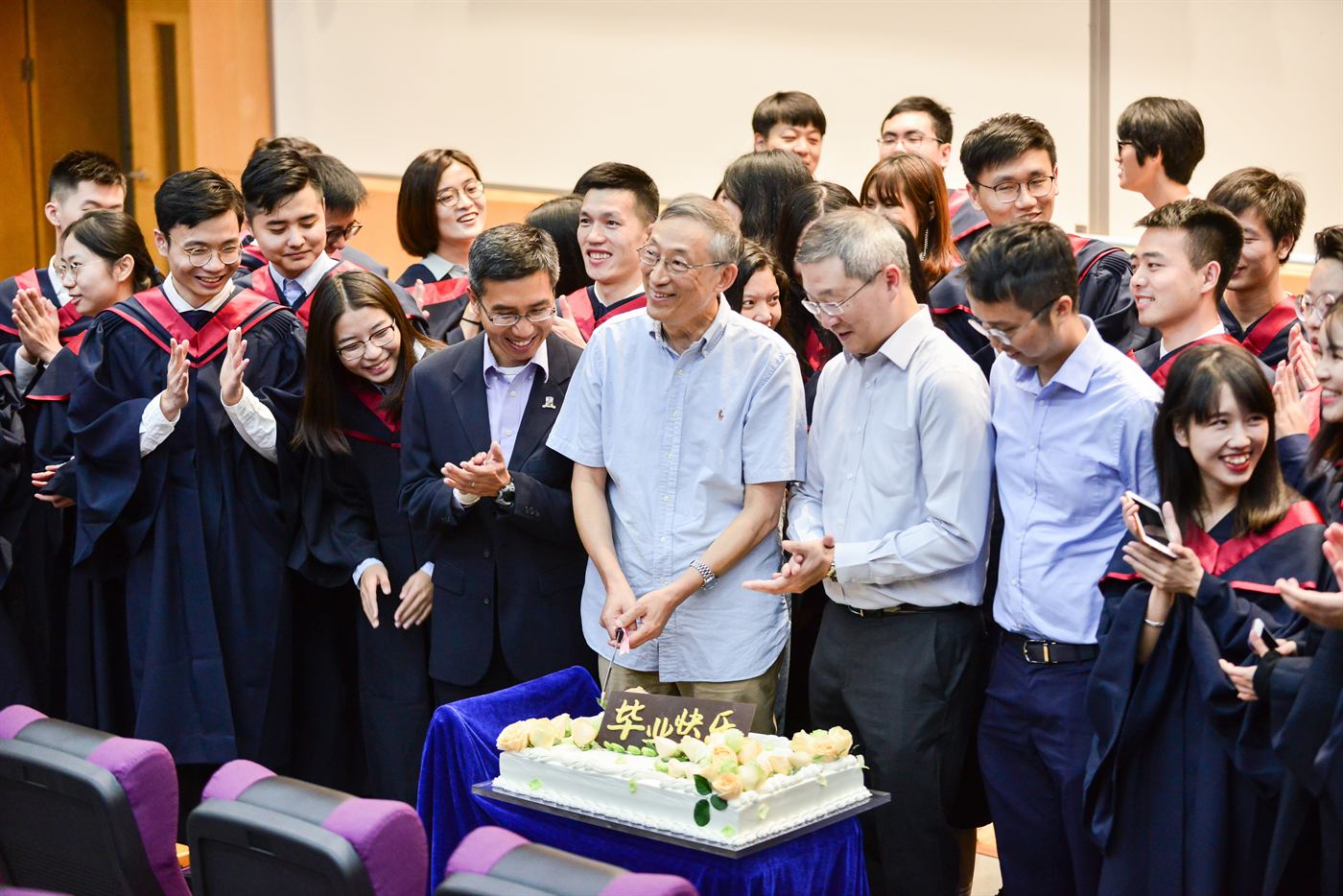
Rooted in the School's interdisciplinary ecosystem
A Fertile Groundfor Theory
SDS connects computer science, statistics, operations research, AI, machine learning, big data, and decision systems, giving theory a broad data-science setting.

Rigorous algorithmic and mathematical foundations fordata, learning, optimization, and decision systems.
We are a focused theory community at the School of Data Science, CUHK-Shenzhen. Our research connects algorithms, optimization, learning, economics, and discrete mathematics with the foundational questions behind modern data-driven systems.
Rooted in the School's interdisciplinary ecosystem
SDS connects computer science, statistics, operations research, AI, machine learning, big data, and decision systems, giving theory a broad data-science setting.
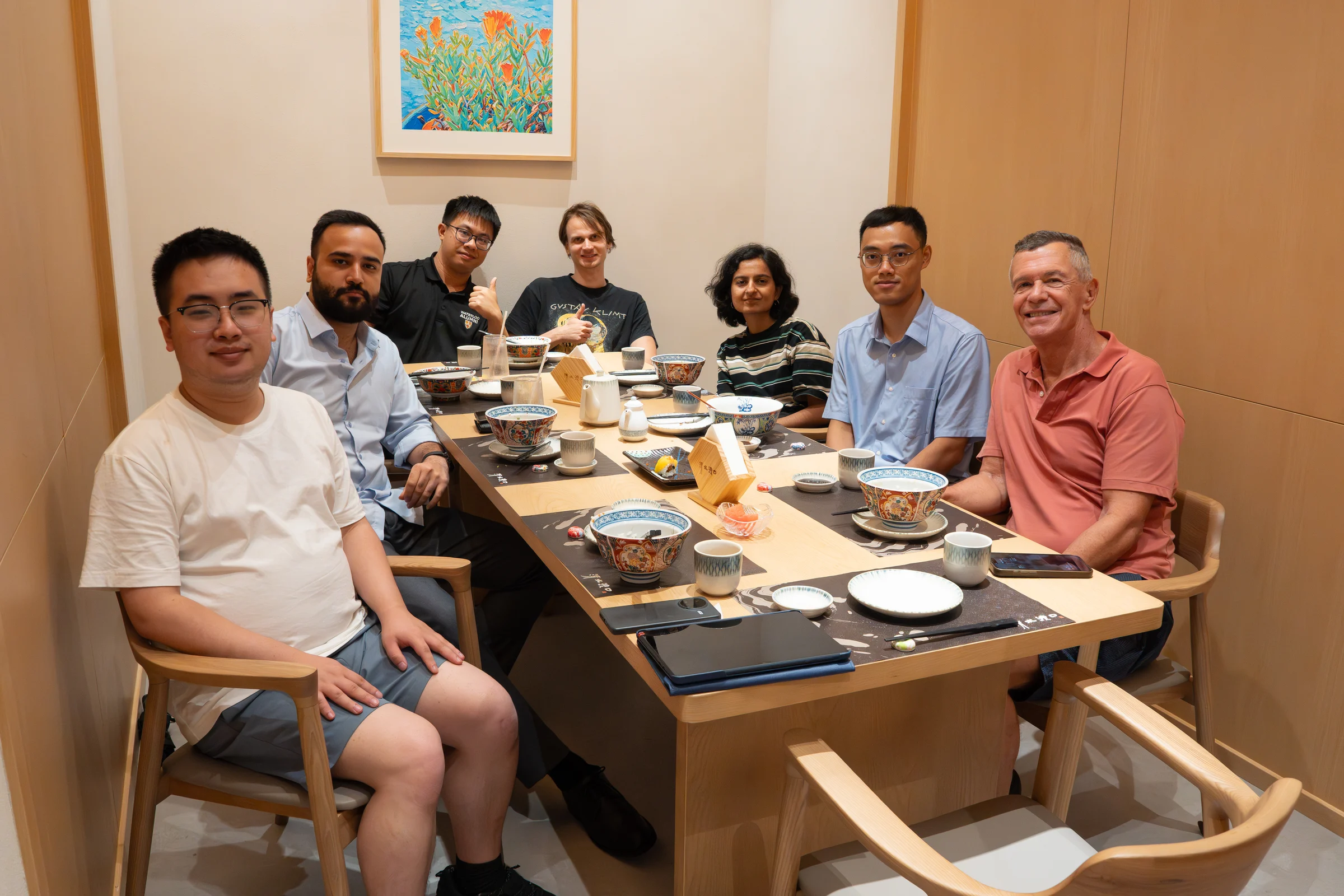
Solid backgrounds and international perspective
Members bring rigorous theory training and international perspective, with diverse but complementary research focuses that connect mathematical and algorithmic thinking to foundational questions in data science.
From strong problem solving to research maturity
Close advising, sustained discussion, and real research problems help students develop rigorous habits and independent taste, growing into young scholars who identify problems, distill questions, and advance research.
Open exchange and sustained encounters
Theory grows through discussion. Seminars, reading groups, student meetings, visitor talks, informal problem sessions, and cross-area collaborations build a steady academic rhythm.
Theoretical foundations for graph algorithms, dynamic and streaming models, online algorithms, data structures, and database and data mining theory.
Mathematical foundations for optimization, machine learning theory, statistical foundations, and theoretical data science.
Theoretical foundations for mechanism design, information design, algorithmic game theory, learning decision-makers, and decision systems.
Prof. Tao Lin’s paper "Does AI Help or Harm? Endogenous Information Acquisition with AI Advice" has been accepted to the Conference on Web and Internet Economics (WINE 2026).
Prof. Jingbang Chen’s paper "Scalable Algorithm for Dynamic Quasi-clique Detection" has been accepted to the IEEE International Conference on Data Engineering (ICDE 2027).
Prof. Jingbang Chen’s paper "Faster Distance Oracles for Dynamic Interval Graphs" has been accepted to the International Symposium on Algorithms and Computation (ISAAC 2026).
Prof. Jingbang Chen’s paper "Nearly Optimal Internal Dictionary Matching" has been accepted to the European Symposium on Algorithms (ESA 2026).
The SDS Theory Group website is now live as a public home for members, students, events, news, and contact information.
Prof. Tao Lin has three works accepted to ACM Conference on Economics and Computation (EC 2026): "Information Design with Large Language Models", "The Price and Complexity of Explainable Information Design", and "Gradient Dynamics in First-Price Auctions: Iterative Strategy Elimination via Cubic Potentials".
Prof. Aditi Dudeja’s paper "Frontier Space-time Algorithms Using Only Full Memory" has been accepted to Computational Complexity Conference (CCC 2026).
Prof. Aditi Dudeja’s paper "Distributed Stochastic Graph Algorithms" has been accepted to ACM Symposium on Principles of Distributed Computing (PODC 2026).
The SDS Theory Seminar hosts research talks and discussions in algorithms and the theoretical foundations of data science.
Reading groups will support shared learning across algorithms, optimization, economics, and data science foundations.
Student meetings will provide a regular space for research updates, feedback, and early-stage ideas.
The group welcomes short visits and informal research discussions with external scholars.
Informal sessions will help students and faculty explore early-stage questions before they become polished projects.
Cross-area collaborations connect theory with data science, operations research, statistics, learning, and decision systems.